If you are a business owner or a marketing professional, you know how important it is to stand out from the competition. You’re not only offering a product or service, you’re sharing the story behind your brand.
You can have a great product, but if your marketing materials do not look professional, you will have a hard time getting noticed. This is where the connection between marketing and graphic design becomes critical.
Graphic design today is about more than appearances. It is a strategic tool that helps you communicate your brand's message, attract customers, and build loyalty. The very first impression people have of your brand is shaped visually. In fact, a study from Adobe found that 55% of a brand's first impression is visual.
This means that within the first few seconds, your audience is already deciding what they think of you, based entirely on your design.
In this blog, we will discuss how graphic design and marketing go hand-in-hand and how beneficial a great design is for your brand.
Before discussing the bigger picture of how design supports marketing, let’s first look at what strong graphic design really brings to a brand on its own
You can have a great product, but if your marketing materials do not look professional, you will have a hard time getting noticed. This is where the connection between marketing and graphic design becomes critical.
Graphic design today is about more than appearances. It is a strategic tool that helps you communicate your brand's message, attract customers, and build loyalty. The very first impression people have of your brand is shaped visually. In fact, a study from Adobe found that 55% of a brand's first impression is visual.
This means that within the first few seconds, your audience is already deciding what they think of you, based entirely on your design.
In this blog, we will discuss how graphic design and marketing go hand-in-hand and how beneficial a great design is for your brand.
Before discussing the bigger picture of how design supports marketing, let’s first look at what strong graphic design really brings to a brand on its own
Why Is Graphic Design Important for Your Brand?
The first and most important benefit of professional graphic design is that it builds trust and credibility. When a customer sees a professional-looking logo, a clean website, or high-quality marketing materials, they see a business that is organized and reliable. This professionalism signals that you care about your work and will deliver a high-quality product or service.
Let’s look at some key advantages strong design brings to your business identity.
1. Building Your Visual Identity
Your visual identity is the foundation of your brand. It includes your logo, your colour palette, and the fonts you use. These elements are what make your business recognizable. According to studies, about 81% of buyers remain loyal to brands they feel they can trust. Design acts as the foundation for earning trust from your audience.
When you use consistent design across all your platforms, you are reinforcing who you are. People usually need to encounter your logo or branding several times before it becomes familiar and recognizable. When your visuals remain consistent, your brand becomes easier to recognize and recall.
Consistency in branding isn’t just aesthetic, it can increase company revenue by close to 23%. This consistency makes it much easier for customers to recall your business and choose you over a competitor.
When you use consistent design across all your platforms, you are reinforcing who you are. People usually need to encounter your logo or branding several times before it becomes familiar and recognizable. When your visuals remain consistent, your brand becomes easier to recognize and recall.
Consistency in branding isn’t just aesthetic, it can increase company revenue by close to 23%. This consistency makes it much easier for customers to recall your business and choose you over a competitor.
2. Communicating Your Values Through Design
The colours, shapes, and styles you choose in your design communicate your brand's values without you having to say a single word.
For example, a business that uses bold, vibrant colours and modern, geometric fonts might be seen as innovative and energetic. A company that uses a simple, elegant colour palette and classic serif fonts might be seen as traditional and trustworthy.
Your design choices help you attract the right audience. You can use design to tell a story and create an emotional connection with your customers.
For example, think about the difference between the visual identities of a financial institution and a toy company. The financial institution will likely use cool colours like blue to suggest trust and stability, while a toy company will use bright, warm colours to suggest fun and playfulness. The design itself communicates the brand's purpose and tone. This is a core part of using graphic design in business.
Still, these benefits are only valuable when they’re put into real-world practice. So how does graphic design actually show up in the day-to-day activities of businesses and marketers?
For example, a business that uses bold, vibrant colours and modern, geometric fonts might be seen as innovative and energetic. A company that uses a simple, elegant colour palette and classic serif fonts might be seen as traditional and trustworthy.
Your design choices help you attract the right audience. You can use design to tell a story and create an emotional connection with your customers.
For example, think about the difference between the visual identities of a financial institution and a toy company. The financial institution will likely use cool colours like blue to suggest trust and stability, while a toy company will use bright, warm colours to suggest fun and playfulness. The design itself communicates the brand's purpose and tone. This is a core part of using graphic design in business.
Still, these benefits are only valuable when they’re put into real-world practice. So how does graphic design actually show up in the day-to-day activities of businesses and marketers?
Where Does Graphic Design Show Up in Everyday Business and Marketing?
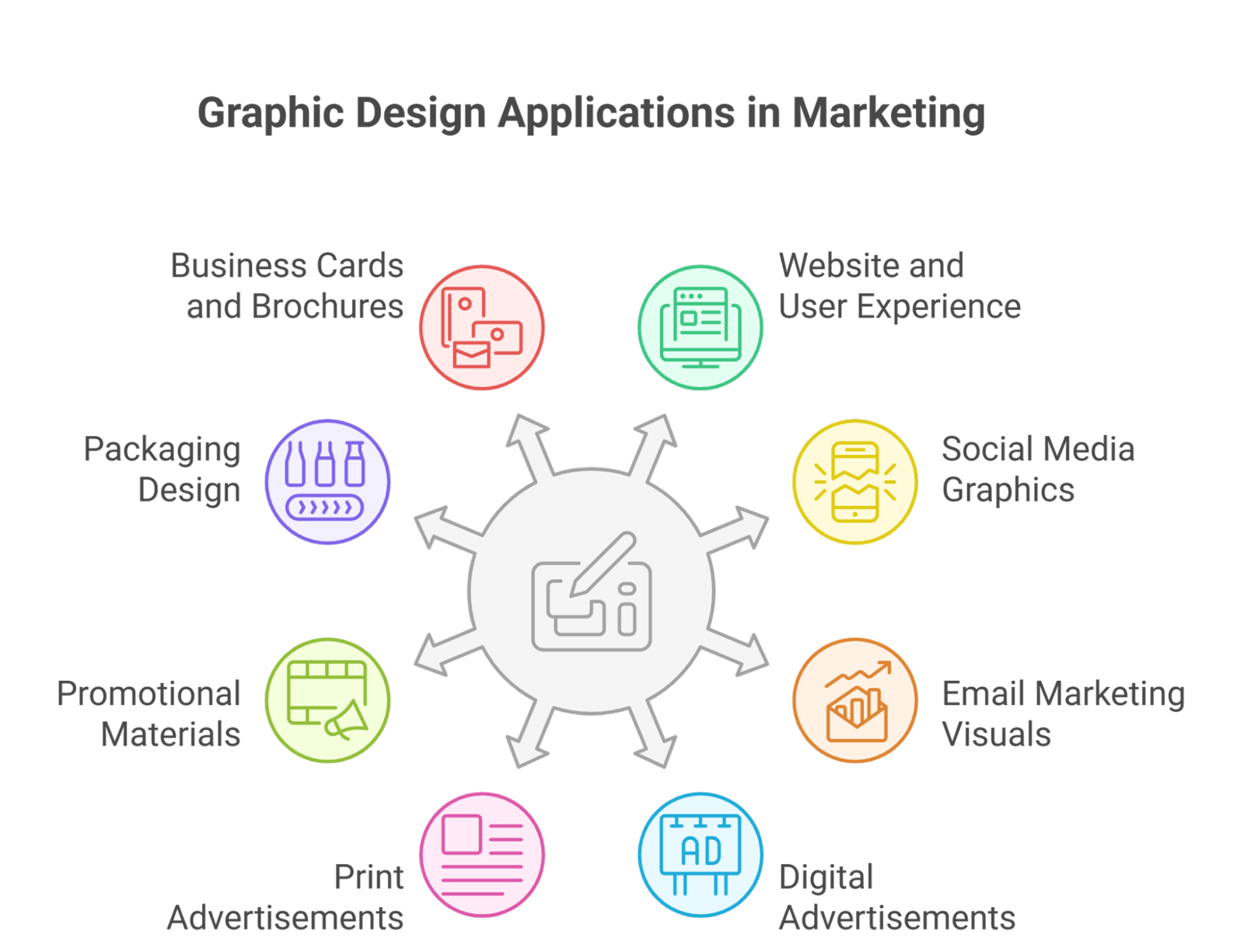
Graphic design is used in business far more than you might think. From your website to social media posts, design influences almost every touchpoint a customer has with your brand.
Graphic Design in Digital Marketing
The digital space is where most modern marketing happens. In this space, your visuals are your primary tool for engaging with an audience.
1. Your Website and User Experience
- You Make a First Impression: Studies reveal that 94% of first impressions are shaped by design quality. If your site looks outdated or unprofessional, people will not trust you and will leave quickly. A thoughtfully designed website signals professionalism and credibility to potential clients.
- You Improve User Experience: Good design makes your website easy to navigate. From the page layout to the buttons, every element should feel intuitive. When you make it simple for people to find what they need, they are more likely to stay on your site, learn about your business, and become a customer.
- You Avoid User Frustration: Poor design, such as a cluttered layout or confusing navigation, creates friction for your users. This can frustrate a visitor and cause them to go to a competitor’s site instead. A good design, however, creates a seamless and positive experience, which builds a stronger connection to your brand.
2. Social Media Graphics
- You Grab Instant Attention: On crowded platforms like Instagram and Facebook, your content needs to stand out immediately. Graphics make your posts more visible and engaging than plain text. In fact, posts with images receive 150% more engagement than posts without them.
- You Tell Your Brand's Story: Your social media graphics are a way to share announcements, promotions, and tips in a visual format. By aligning each piece of content with your brand’s visual identity, you ensure your audience recognizes your content no matter where they see it. This consistency reinforces who you are as a brand.
3. Email Marketing and Visuals
- You Make Your Emails More Readable: Visuals break up large blocks of text and make your emails easier to scan. By highlighting important information with graphics, you can guide the reader's eye and make sure your message is clear.
- You Get More Clicks: Email campaigns that include images have a higher click-through rate than emails with only text. This means people are more likely to click on your links and engage with your content.
- You Build Your Brand: A professional email template that uses your logo, brand colours, and fonts reinforces your brand with every message you send. This consistency makes you look more professional and trustworthy to your subscribers.
Graphic Design in Advertising
Graphic design is at the core of all advertising. It uses visuals to capture interest and motivate people to act. Whether you are running a digital ad campaign or a print ad in a magazine, the design is what communicates your brand's message.
1. Digital Advertisements
Online advertising is a major part of modern marketing. This includes banner ads, pop-ups, and social media ads. A professional graphic designer creates these ads with a clear purpose: to attract an audience and promote a product.
The ad’s design, colours, and typography all work together to communicate your message quickly and effectively. They are designed to stand out and encourage a click or a purchase.
2. Print Advertisements
Print ads still play a vital role. This includes ads in newspapers, magazines, and billboards. A designer carefully plans the layout and visual elements of a print ad to make sure it is memorable and clearly communicates your value.
3. Promotional Materials
Businesses rely on graphic design across promotional materials, from brochures and posters to flyers and other handouts. These materials need to be visually appealing to get noticed. A flyer that’s thoughtfully designed can instantly draw attention, while one with poor design will likely be overlooked. Your design helps to amplify your brand perception and drive more business.
Graphic Design in Print and Physical Marketing
Even though the focus has shifted towards digital mediums, physical marketing materials still matter. They provide a tangible connection to your brand.
1. Packaging Design
- You Influence Purchasing Decisions: Your product's packaging is a powerful tool for a sale. It helps your product get noticed in a crowded store and makes a customer interested enough to pick it up.
- You Communicate Value and Quality: A well-designed package tells customers about the quality and value of what's inside. For example, a clean and simple design might signal a high-end product, while a colourful, bold design might suggest a fun and affordable one.
- You Position Your Product: The design of your packaging helps you position your product in the market. It tells customers who your product is for and what they can expect from it.
2. Business Cards and Brochures
Professional business cards and brochures still play a vital role. They provide a physical reminder of your business and maintain consistency with your online identity. Even something as small as a business card, when designed well, can make a memorable and professional first impression.
Brochures can give a potential client a detailed look at your services in a format they can hold and reference later.
This is a comprehensive overview of how graphic design is used in business and marketing. It is not just one thing. It is a full-scale, integrated effort that keeps your brand visible and consistent.
Seeing the different ways design is applied gives us context, but what do these efforts actually deliver? Let’s explore the measurable, real-world results businesses gain from great design.
What Practical Advantages Does Graphic Design Bring to Your Business?
You may be wondering if investing in professional graphic design is truly worth it. The answer is yes. The impact of good design goes far beyond appearance. They directly impact your business's revenue and growth.
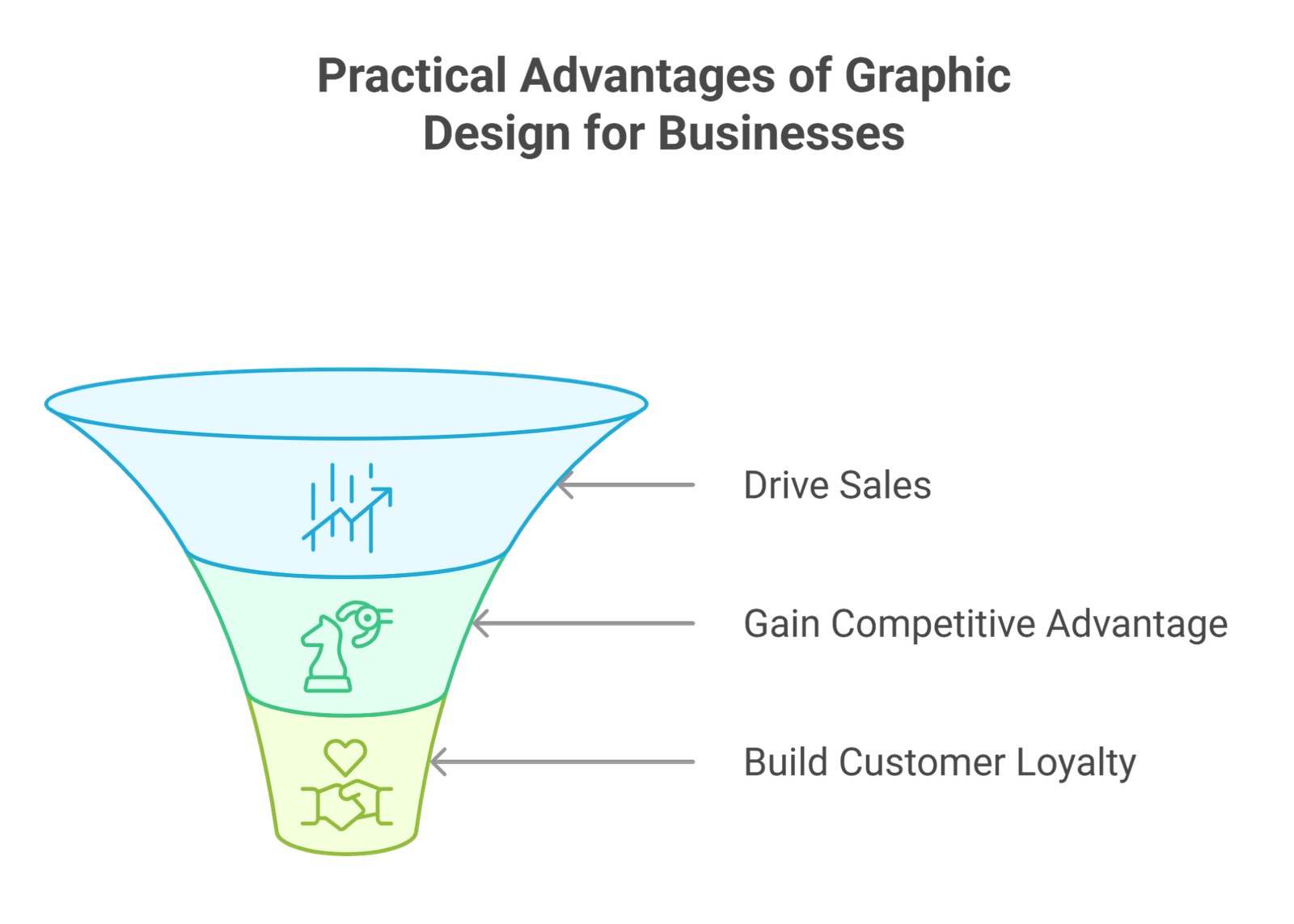
1. Driving Sales and Conversions
Good design encourages people to buy. A study found that 73% of consumers are more inclined to purchase from brands that use high-quality images. When your visuals look professional and appealing, you are more likely to convert browsers into buyers.
This applies to everything from a well-designed product image on your website to a compelling graphic in your social media ad. Good design leads to higher click-through rates, which in turn leads to more sales.
2. Gaining a Competitive Advantage
Standing out is tough in today's market. Distinctive visuals can give your business a competitive edge. A memorable logo and a cohesive visual style can give you a significant advantage and attract customers who might otherwise go to a competitor. Through design, you can clearly express what makes your brand unique and why customers should choose you. It is your visual differentiator.
For example, if two companies offer the same service, but one has a modern, professional website and a clear brand identity, while the other has a confusing, outdated site, customers will naturally gravitate toward the first company. The design gives that company a competitive edge.
3. Building Customer Loyalty
When you consistently present a professional and cohesive brand image, you build trust and familiarity. Customers learn to recognize and rely on your brand. This builds customer loyalty and keeps them coming back.
Consistent design helps you achieve this recognition faster, which builds a stronger relationship with your audience.
When your brand is consistent, it builds a sense of reliability. Customers feel that they know what to expect from your business, and that predictability makes them feel comfortable. This comfort is what encourages them to become repeat customers.
The strategic use of graphic design in business is a long-term investment that provides a real return. It helps you get noticed, build trust, and ultimately, grow your business.
Now that we’ve covered the outcomes, it’s helpful to see how design plays out in action. Here are some examples of graphic design seamlessly integrated into marketing strategies.
Examples of Graphic Design in Marketing
To better understand how these principles work in the real world, let's look at some examples of well-known brands that use graphic design to their advantage. These companies show how effective design can be for building a brand and connecting with customers.
Brand Identity and Recognition
A clear visual identity is a key to being a successful brand. When someone sees your logo, it should instantly remind them of your brand.
- Google: The Google logo is an example of strong, simple graphic design. The company uses a clean, sans-serif font and a specific colour palette across all its products, from the search engine to Google Maps. This consistent design makes the brand instantly recognizable and trustworthy to people all over the world.
- Coca-Cola: The Coca-Cola logo is a classic example of a brand identity that has lasted for decades. Its famous script font is unique and has a strong sense of history. The consistent use of this logo and the red and white colour scheme across all products ensures that people immediately recognize the brand.
Website and User Experience
Having a polished website with a seamless user experience is essential for turning visitors into paying customers.
- Apple: Apple's website showcases a clean, minimal design that feels intuitive and easy to use. It uses a clean layout, plenty of white space, and high-quality product images. The simplicity of the layout helps people quickly explore products and complete purchases without friction.
- Amazon: Amazon's website is designed to be functional and easy to use. The layout is structured to help you find products quickly. The use of clear calls to action and organized product listings shows how a well-thought-out design can make the purchasing process straightforward.
Social Media Marketing
On social media, your graphics need to grab attention in a matter of seconds.
- Nike: Nike's social media content uses a consistent visual style, often featuring black and white images with bold, simple text. The design is focused on action and performance. This visual consistency helps the brand stand out and reinforces its message to its audience.
- Starbucks: Starbucks' social media graphics are recognizable for their use of green, white, and often a circular logo shape. Their content is designed to feel friendly and inviting, which matches the brand's identity.
These examples show that whether you are a new business or a large corporation, the principles of graphic design and marketing are essential for success.
These examples prove how essential design already is, but the relationship between design and marketing continues to evolve. So, what does the future look like for companies that want to stay competitive?
What's Next for Graphic Design and Marketing?
Marketing is always changing. New technologies are constantly giving us new ways to connect with customers. Today, we are seeing trends in interactive graphics, motion design, and even augmented reality (AR) experiences.
1. The Rise of Motion and Video
Video content is increasingly important in marketing. Video ads and motion graphics have the power to grab attention far more effectively than still images. You can use motion design to tell a dynamic story or to make complex information easy to understand.
A professional design partner can help you integrate video and motion into your marketing strategy, from short social media videos to longer promotional videos for your website.
2. Interactive Experiences
With interactive design, brands can deliver a more immersive and engaging journey for their audiences. This could be anything from a simple quiz on your website to a complex interactive infographic. Interactive designs encourage users to spend more time with your content and learn more about your business.
3. Staying Ahead of the Curve
As these new trends emerge, the core principles of good graphic design remain the same: clear communication, professional presentation, and consistency. A professional design partner helps you manage these new areas without losing sight of your brand's identity.
They ensure you stay current and competitive while keeping your message strong. The future of graphic design and marketing is dynamic, and with the right partner, you will be prepared for what comes next.
Ready to Grow with Professional Graphic Design?
Professional graphic design is not an extra cost, it is a necessary investment. It builds trust, is used in every aspect of your marketing, and directly contributes to the growth and success of your business. Without a professional visual presence, you are leaving money on the table and making it harder for customers to find you.
Ready to Get Started?
At
YourA2Z,
is here to be your expert partner. We can handle all your graphic design needs, from creating a new logo and branding guide to managing your social media visuals and website design. That way, you can concentrate on what truly matters: growing and running your business.
We invite you to contact us today, . Let's talk about your project and see how professional graphic design can help you achieve your goals.
We invite you to contact us today, . Let's talk about your project and see how professional graphic design can help you achieve your goals.