When was the last time you viewed your website from your customer’s perspective? Your website is your business's digital storefront. It's often the first place a potential customer will find you, and you have only a few seconds to make a great impression. The way your site is designed shapes the impression visitors take away. It is the core of your digital identity and a critical factor in whether a visitor stays on your site or leaves.
Website graphic design goes beyond simply making a site look good. It's about creating a user experience (UX) that is intuitive, trustworthy, and engaging. When a website is well-designed, it guides visitors smoothly toward a purchase. When it's poorly designed, it creates friction that can cost you sales.
This blog post will explain why website graphic design is essential for user experience, how it directly impacts your business, and the key elements you need to get right.
Before going deeper, let’s first understand why website graphic design holds so much importance for businesses today.
Why Website Graphic Design Matters for Your Business
The design of your website serves as the backbone of your digital presence. It influences how customers see your brand and whether they choose to do business with you.
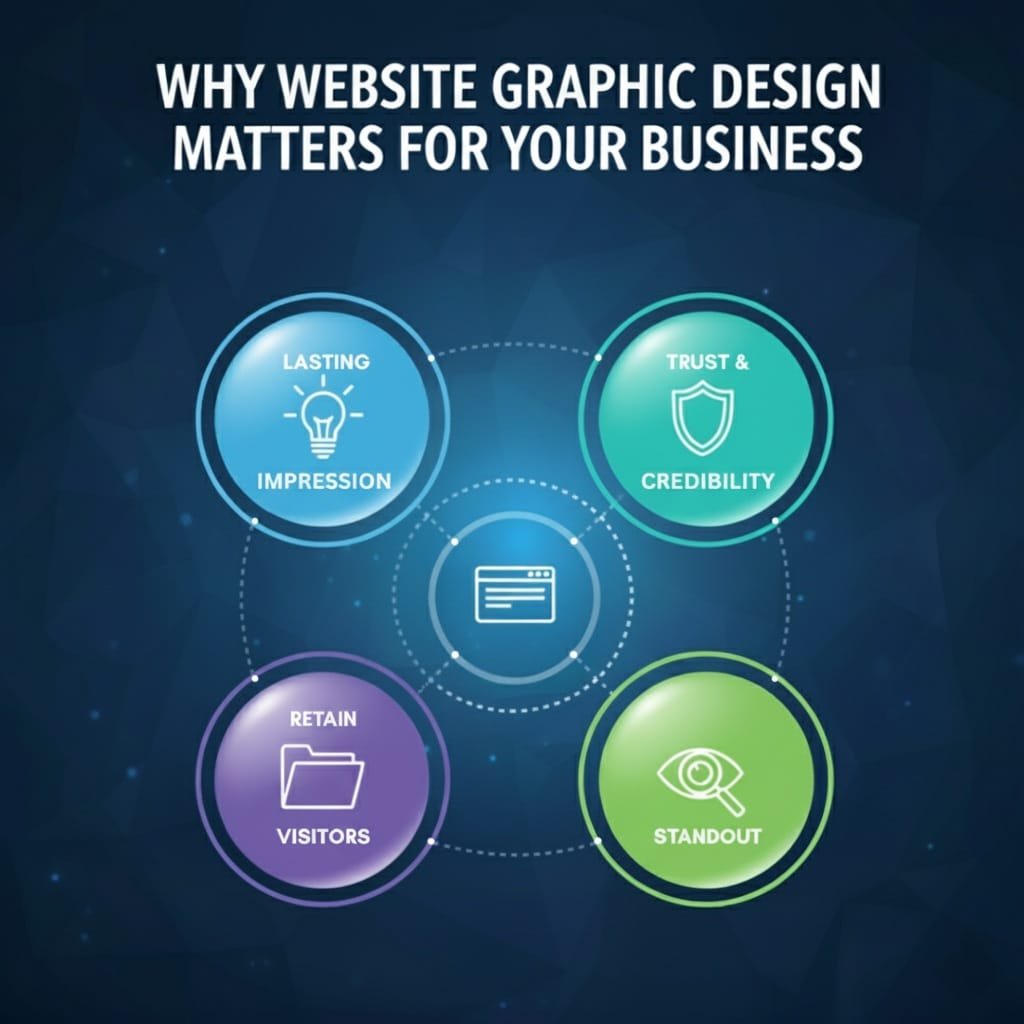
1. You Make a Lasting First Impression
First impressions matter greatly in the digital space. A study found that 94% of people's first impressions of a website are design-related. You only have a split second to leave a positive impact on a visitor.
A professional, modern design makes you look credible and established. A poorly designed or outdated site, however, can make a customer question your business's legitimacy, no matter how good your products are.
2. You Build Trust and Credibility
A thoughtfully designed website is one of the strongest tools for earning customer trust. When your site is clean, organized, and easy to use, you signal that your business is professional and reliable.
A study from ResearchGate showed that website visual design is a key driver of trust for both male and female online shoppers. When users trust your site, they are more likely to complete a purchase.
3. You Attract and Retain Visitors
A website with a great design attracts visitors and encourages them to stay longer. Studies show that a visually engaging website can reduce the bounce rate by 38% and increase the time visitors spend on your site by 47%. By creating a smooth, positive experience, visitors are encouraged to spend more time exploring your content and learning about your brand.
4. You Differentiate Yourself from Competitors
Your website's design can be your biggest advantage when the competition is high. A unique and memorable design helps you stand out. While many competitors might offer similar products, a superior website that is easy to navigate and visually appealing can be the deciding factor for a customer. It tells a story about your brand and communicates why you are the better choice.
Understanding why design matters is just the beginning. To put it into action, you also need to understand the core elements that make website design effective.
What are the Core Elements of Effective Website Graphic Design
Effective website graphic design is made up of several key elements that work together to create a seamless user experience. Getting these elements right will help you build a professional and trustworthy website.
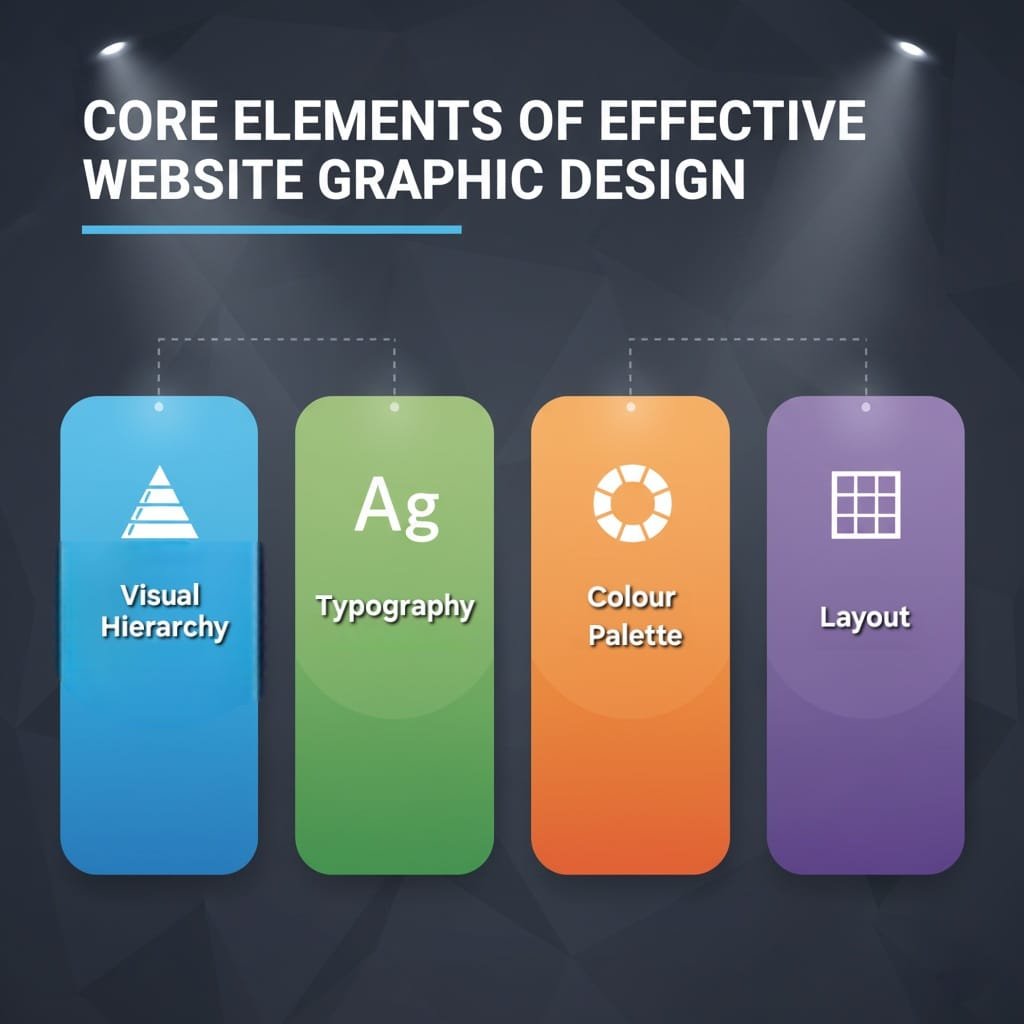
1. Visual Hierarchy
Visual hierarchy means organizing design elements to highlight what’s most important. A designer uses size, colour, and placement to guide a visitor's eye. This guides visitors toward the key information on each page.
This could be your main headline, a product image, or a call-to-action button. A clear hierarchy minimizes clutter and makes your content easier for visitors to scan.
2. Typography
The fonts you use on your website are a part of your brand's voice. Choosing the right typography ensures readability while reflecting your brand’s tone. A business that wants to appear modern might use a clean, sans-serif font, while a brand that wants to look more traditional might use a classic serif font. You must ensure your fonts are legible on both desktop and mobile screens to provide a good user experience.
3. Colour Palette
Colours have a powerful psychological effect. The colours you choose for your website can evoke emotions and create a mood. They also make your brand more recognizable.
For example, blue often conveys trust and security, which is why it is used by many financial and tech companies. A consistent colour palette is a crucial element of your brand identity and helps with brand recognition.
4. Layout and White Space
Website layout refers to how text, images, and other elements are structured. A simple, well-organized layout is essential for a smooth user experience. You should use plenty of white space—the empty space between and around elements—to prevent your pages from looking cluttered. White space makes your content easier to read and helps your key messages stand out.
YOU MAY ALSO LIKE:
Why Print Advertising Is a Powerful Tool for Your Business
Once you know the elements, the next question is: how do they affect results? This is the point where the effect of design on conversions becomes evident.
How Graphic Design Directly Impacts Website Conversions
A strong website design does more than improve appearance. It actively works to convert your visitors into customers. Good design reduces friction in the buying process and guides people to take the actions you want them to take.
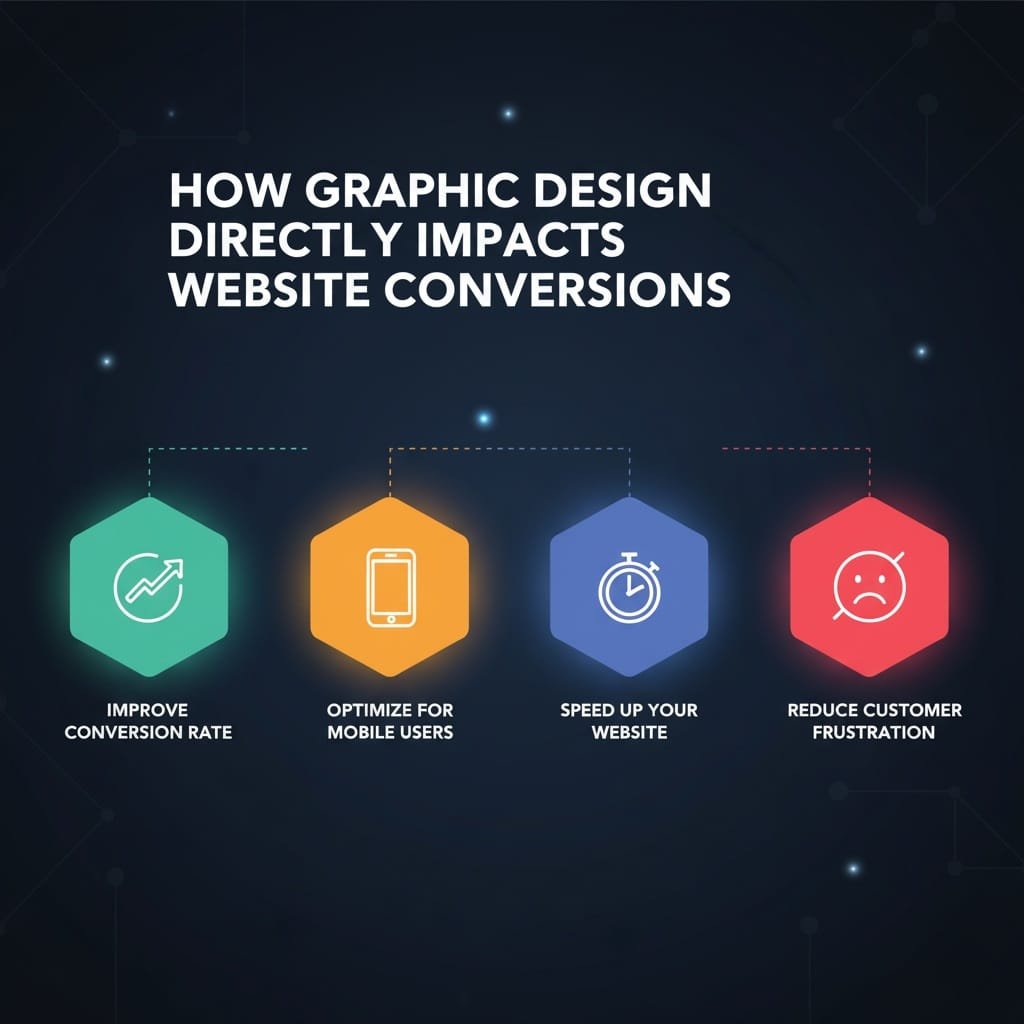
1. You Improve Your Conversion Rate
Good design can have a direct influence on your conversion rates and can increase your sales[c].. Research shows that good user interface (UI) design can increase conversion rates by up to 200%, and good UX design can boost it even further. This is because a good design makes the buying process simple and intuitive.
For example, a clear and well-placed call-to-action button can dramatically increase the number of clicks you get.
2. You Optimize for Mobile Users
Today, the majority of people browse the internet on their phones. Research shows that customers are more likely to buy from a brand with a mobile-friendly website. If your site does not work well on a mobile device, you will lose sales.
Professional website graphic design ensures your site is responsive and provides a seamless experience on any device, from a large desktop screen to a small mobile phone.
3. You Speed Up Your Website
Website loading speed plays an important role in the overall user experience. You know that people are impatient. Studies show that a one-second delay in page loading can result in a 7% reduction in conversions.
A professional designer knows how to optimize images and website code to ensure your pages load quickly and prevent visitors from leaving your site out of frustration.
4. You Reduce Customer Frustration
Poor design creates frustration. A website with a cluttered layout, confusing navigation, or slow loading times will cause your visitors to leave. Studies reveal that 77% of Indian users leave a site if they face poor usability.
Good design, on the other hand, creates a positive and seamless experience, which builds a stronger connection to your brand and encourages repeat visits.
Understanding the theory is helpful, but seeing it in practice makes it real. Let’s look at some examples of how good website graphic design has worked for other businesses.
Real-World Examples of Successful Website Graphic Design
You can see the power of professional design in the websites of successful companies. These real-world examples show how strategic design choices translate into a better user experience and a stronger brand.
1. Apple
Apple's website is a prime example of minimalist and user-friendly design. Using a simple layout, sufficient white space, and sharp product images helps create a premium experience. The navigation is simple and intuitive, which makes it easy for visitors to find information and make a purchase. The entire design of the Apple website reinforces the brand's reputation for innovation and high quality.
2. Zomato
Zomato is a powerful example of how user-focused design can drive growth. Zomato uses a clean layout, easy-to-use filters, and clear visuals to help you find food quickly. It simplifies a complex process—ordering from hundreds of restaurants—into a simple, intuitive experience. This focus on the user journey has made Zomato a leader in its industry.
3. Cleartrip
Cleartrip, a popular online travel company in India, is another great example. Its website is designed to make travel planning simple. By integrating features like map-based searches for trains and flights, Cleartrip has made the booking process more intuitive. The website's focus on a seamless user experience has helped it build a reputation for reliability and convenience.
Conclusion
Your website's design is a critical business strategy. It builds trust, improves user experience, and directly impacts your conversions and sales. A professional, well-designed website is your most valuable asset for attracting and keeping customers.
Your Partner in Graphic Design for Websites
YourA2Z
is here to be your expert partner in this process. Our team can build a website that’s not only visually attractive but also structured to deliver real business results. We provide professional graphic design for websites that ensures your brand is perceived as trustworthy and professional and gives you a competitive edge in the market.
Want to scale your business with a professionally designed website? Let’s make it happen.
Want to scale your business with a professionally designed website? Let’s make it happen.